
How to Have a Positive Birth Experience is the third post in my Conversations With a Midwife series, drawing from my conversation with certified nurse midwife Victoria Gordon, founder of Red Moon Midwifery. From her offices in Jacksonville, FL, St. Mary’s and Valdosta, GA, she cares for families seeking home birth, midwifery care, and holistic wellness. If you missed them, you can read Post 1 and Post 2 here.
You’ve probably heard people say, “All that matters is a healthy baby.” But if we’re being honest… you want more than that.
You want to feel calm and you want to feel supported. You want to look back and feel like you were part of your birth, not that it was something that just happened to you. And if you’re planning a hospital birth, you might be wondering if that’s even possible.
It is. But it doesn’t happen by accident.
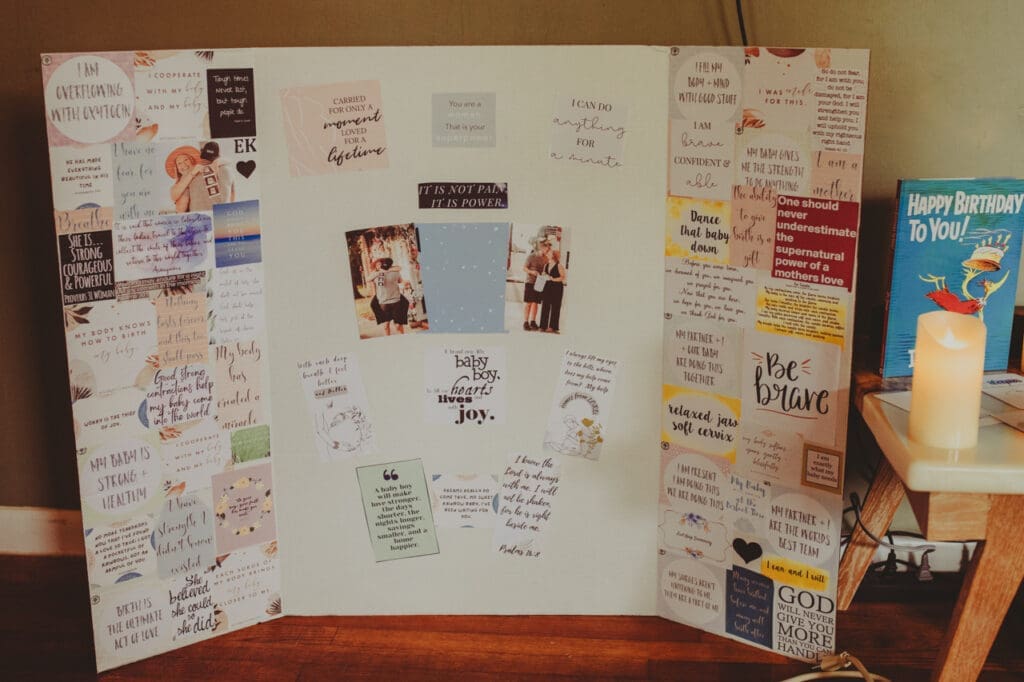
Start With Education and Self-Awareness
Knowledge is power in birth. Understanding what’s happening with your body and knowing your options can dramatically reduce fear. This, I think, is the most important part in having a positive birth experience.
How can you make an informed decision for yourself if you don’t have all the information? Unfortunately, all too often Moms can’t rely on their doctors to tell them everything they need to know, so it falls to us to self-educate.
Victoria reminded me that education doesn’t mean memorizing medical facts, it means building confidence. Even a basic understanding of what’s normal in labor, what options are available, and how to respond when things change can give you a solid foundation.
“You don’t need to know everything, but you need to feel like this is your experience, that you’re part of it, not just along for the ride.”
Consider:
- Taking a childbirth education class that aligns with your birth goals
- Learning about common interventions and your choices
- Reflecting on your own fears, hopes, and expectations for the experience
With my first births, I thought reading a couple of books was enough. But when something unexpected happened, we panicked. We didn’t know what to do or even what questions to ask. Later, once I understood even the basics of interventions and options, I walked into birth feeling calmer and more confident. That made all the difference.
Build a Supportive Birth Team
“I think birth trauma often comes when people feel like they didn’t have a voice.”
One of the biggest factors in having a positive birth experience is who is in the room with you. Your provider and support team shape so much of your experience.
Victoria returned to this theme again and again: who surrounds you matters. Your team is more than your medical provider, it’s also the people who will be there to support you during the birth, and they can be just as important. For some, they only want their partner there. For others, it’s their partner and a doula. And still others want their Mom, their best friend, and their sister alongside their partner and doula.
“Even in the hospital, you can create a little cocoon of support if the people around you know your wishes and are ready to advocate for you.”
Ways to build that support:
- Choose a provider who listens and shares your values
- Bring a doula or another support person into the conversation early
- Involve your partner in prenatal visits so they understand how to support you
I’ve seen the difference a strong support system makes. In some rooms, you can feel the tension if Mom doesn’t feel listened to. Sometimes she’s even the only one fighting for herself, which is absolutely exhausting in labor. But in other rooms, and especially at home births, there’s this cocoon of calm—partners leaning in, doulas quietly helping, providers respecting space. The whole atmosphere shifts when a family feels safe and supported.
Victoria emphasized that you shouldn’t be afraid to switch providers if the relationship doesn’t feel right.
“If you don’t feel like your provider is listening, or if you’re not comfortable asking questions, then they’re not the provider for you.”
You deserve to feel respected and heard. The right team doesn’t just provide medical care. They help create a space where you feel safe, cared for, and able to labor on your own terms.

Communicate Your Preferences Early (Especially in a Hospital)
It’s important to know how you want your birth to go, but it’s just as important to recognize that things can, do, and probably will change. Victoria encourages families to think through their preferences while staying flexible.
Start by identifying your top priorities:
- Labor and delivery preferences (movement, positions, interventions)
- Environment (lighting, movement, people)
- Immediate postpartum and newborn care preferences
I’ve seen many eye rolls when it comes to providers and birth plans. And I think it’s because they know that the more you try to control your birth, the less likely it is to go “as planned.” Make a plan for your ideal birth, what you want if everything goes perfectly, but also… make plans for the “what if” situations that could arise.
Talking through different possibilities can often help ease some of the fears we have around birth. And it can also help us pivot when we need to.
“When families communicate what matters to them, providers can often meet them halfway. It sets the tone for mutual respect.”
Share your birth plan early, with your provider and all of your support people. Having your partner or doula on the same page means they can support and advocate for you in the moment. If you want to learn more about birth plans, check out “Do You Really Need a Birth Plan?”
But if you’re planning a hospital birth, you might be wondering how all of this actually plays out in that environment.
How to Have a Positive Hospital Birth
Hospital birth comes with its own rhythms, policies, and expectations. And if you don’t understand how to navigate that, it’s easy to feel like things are happening to you instead of with you.
But a positive hospital birth is absolutely possible.
One of the things Victoria kept coming back to in our conversation was that a positive birth experience isn’t about controlling every detail—it’s about understanding what’s happening and feeling supported within it.
A few things that can make a meaningful difference:
Slow things down when you can
Most decisions in birth aren’t emergencies. You can ask questions, take a breath, and make sure you understand what’s being suggested before saying yes.
Ask questions until you feel clear
You deserve to understand your options. Even something as simple as, “Is this necessary right now?” or “What are my alternatives?” can shift the entire tone of your care.
Hot tip: a great question to ask when you’re feeling a little pressured is “Can you walk me through your thought process on why you think this is the best next step?”
Create a calmer environment within the space you’re given
Dim lighting, quiet voices, movement, music—small things can help your body feel safer, even in a clinical setting.
Know that policies aren’t always the same as your options
Hospitals have routines, but that doesn’t mean every choice is one-size-fits-all. When you understand what’s flexible, you’re better able to advocate for what matters to you.
Have someone in the room who understands how birth works
When you’re in labor, you shouldn’t have to be the one analyzing decisions or remembering everything you learned. Having someone there who can help you process what’s happening in real time can make a huge difference in how supported you feel.
You don’t have to fight the system to have a positive experience. But you do need to understand it—and have the support to move through it in a way that still feels like your birth.
Prepare Your Body and Mind
Positive birth experiences aren’t just about logistics, they’re about mindset and self-care. Victoria explained that mental health plays a powerful role:
“With mental health, from what I have seen in practice, it significantly impacts our birth outcomes. You could be the healthiest girl, but if you have anxiety and you have depression and you’re not getting help, this may or may not go well.”
She added that the way you feel emotionally can directly affect how labor unfolds:
“If a woman is very anxious, her labor will often reflect that. But when she feels safe, calm, and supported, her body usually responds in kind.”
I have seen this happen in real time. I’ve seen Moms begin labor under an incredible amount of stress and then just aren’t able to handle giving birth on top of that stress. My own Mom loves to tell me the story of how she was so afraid of the pain of childbirth, she stalled her own labor. Once her mind was calm again (she got an epidural and went to sleep), her body did the work and before she knew it, she was having a baby.
In the weeks leading up to birth, nurturing both body and mind can make a powerful difference:
- Practice relaxation techniques like deep breathing, guided meditation, or prenatal yoga
- Stay hydrated, nourished, and well-rested
- Visualize your ideal birth and talk through any lingering fears with your support team
I know it sounds woo woo, but visualizing the birth you want can have a huge impact. Even something as small as breathing intentionally or creating a calming playlist can shift your mindset. Birth is physical, but it’s also emotional, mental, and spiritual. If you want to dive deeper into this, I wrote more about the mental side of birth in another post.
“Birth isn’t just something that happens to your body—it’s something you do with your body. It’s your teammate in this.”
Give Yourself Permission to Adapt
Even with the best preparation, birth can be unpredictable. A positive experience isn’t about everything going perfectly, it’s more about whether you felt understood, valued, and supported in your choices along the way.
“I always tell my clients: a birth plan is like a compass, not a GPS. It points you in the direction you want to go, but sometimes you take a different route and that’s okay.”
Flexibility is a form of strength, not failure. Being able to pivot and still feel confident is a powerful skill. Victoria reminded me:
“A birth can still be beautiful even if it goes differently than you imagined. What matters is how you felt. Did you feel heard, respected, supported?”
What It All Comes Down To

Preparing for a positive birth is about more than a plan. It’s about building trust with your body, your team, and yourself. By educating yourself, surrounding yourself with support, and staying flexible, you can create a birth experience that leaves you feeling strong.
For me, this isn’t just theory, it’s lived experience. With my earlier births, I wasn’t as prepared and often felt at the mercy of the moment and my doctor. Looking back, I’m grateful the outcomes were good, but I also know they could have gone very differently. With my later births, after I had taken time to educate myself, add more support, and communicate a clear plan, the experience was completely different. Calmer, more my own, and empowering.
That’s why I’m such an advocate for preparation, for extra support like doulas, and for creating a plan that reflects your values. Birth will always hold surprises, but when you walk in informed and supported, you give yourself the best chance at a positive experience.
This is exactly where having the right support can completely change your experience. You can absolutely prepare on your own—but you don’t have to.
Having someone in the room who understands how birth works, knows how to navigate the hospital system, and is there just for you can be the difference between feeling overwhelmed and feeling grounded.
If you’re planning a hospital birth in Tifton or South Georgia, you can learn more about my doula support here → Tifton doula.
And if you’re not ready for that yet, I created a free guide that tells you exactly what to focus on so you can feel confident and ready for birth and hopefully have a positive birth experience, even if things don’t go “according to plan.”


comments +