

Doula Support in Tifton & Surrounding South GA
Are you pregnant and wondering what a doula does? Most people think doulas show up during labor and offer a few comforting words or pain relief techniques. But that’s actually just a small part.
A doula’s real work happens long before contractions start. It’s in the quiet conversations, the late-night texts, the “is this normal?” moments, and the planning that helps you feel grounded instead of overwhelmed.
Birth is one of the most intense and vulnerable experiences of your life. While your medical provider focuses on your physical safety, a doula supports the rest of you—your emotions, your confidence, your voice, your sense of safety.
So if you’re expecting a baby and wondering what having a doula is actually like, let’s talk about it.
Birth Can Seem Overwhelming and Families Are Under-supported
Pregnancy comes with so much noise. Well-meaning “advice” from everyone you know. Opinions from relatives. Doctors Google and TikTok. Hospital policies. A million decisions you never knew you’d have to make.
Your partner wants to be helpful, but they’re juggling their own nerves and uncertainties. Your provider gives excellent clinical care, but they can’t stay with you continuously and sometimes it feels like they’re too busy to answer all your questions.
There’s a gap.
A big one.
Doula care helps fill that gap with steady, continuous support.
A Quick Side Note About Doula Support
Not everything we talk about in prenatal visits will matter to every birthing person—and that’s okay.
Some people love diving into all the details.
Some want hands-on comfort techniques.
Some want help processing a past birth experience or fear.
Some just want a calm voice and steady reassurance.
There is no “right” combination.
A doula’s job isn’t to hand you a list of things you’re supposed to care about.
It’s to help you uncover what actually does matter to you: your values, your sense of safety, your boundaries, your emotional needs, and the kind of support that feels right in your body.
Once we know your priorities, the right doula can shape your birth experience around you. Not a trend, not a script, and definitely not someone else’s expectations.
So What Does a Doula Actually Do?
Most of a doula’s work happens long before labor begins. During pregnancy, a doula can help you understand your options, prepare emotionally, and feel supported in a way that truly reflects who you are, not what anyone else thinks your birth should be.
What Does a Doula Do During Pregnancy?
A doula helps you:
• Get clear on what you truly want
Not just natural vs medicated, but what helps you feel safe? What do you want your birth to feel like?
• Talk through fears, questions, and options
We make space for the emotional side of preparing for birth, while planning and preparing for the possibilities.
• Understand your options
Positions, interventions, pain relief, hospital routines, newborn procedures… You don’t need to know everything. You just need someone who can help you make sense of what matters for you.
• Build a flexible birth plan
A birth plan outlines what you want in an ideal birth, but also helps you consider any “what-ifs” that might come up. (Learn more about birth plans.)
• Support your partner
Sometimes partners can feel forgotten. A doula can help them feel confident and prepared so they can support you in the ways you want.
• Steady text support
For those “is this normal?” moments that don’t feel big enough for a provider visit, but absolutely matter to you.
What Does a Doula Do During Labor and Birth?
This is the part most people think of, but it’s still only one piece. A doula offers:
• Continuous presence
Unlike shift-based staff, we don’t rotate out. You get the same steady support from beginning to end.
• Emotional support
Reassurance, encouragement, grounding, and a calming presence when things feel intense.
• Physical support
Counterpressure, massage, movement ideas, breathing guidance—the hands-on tools that help your body cope.
• Partner support
Helping your partner know what to do and when, so they feel confident and supported, too.
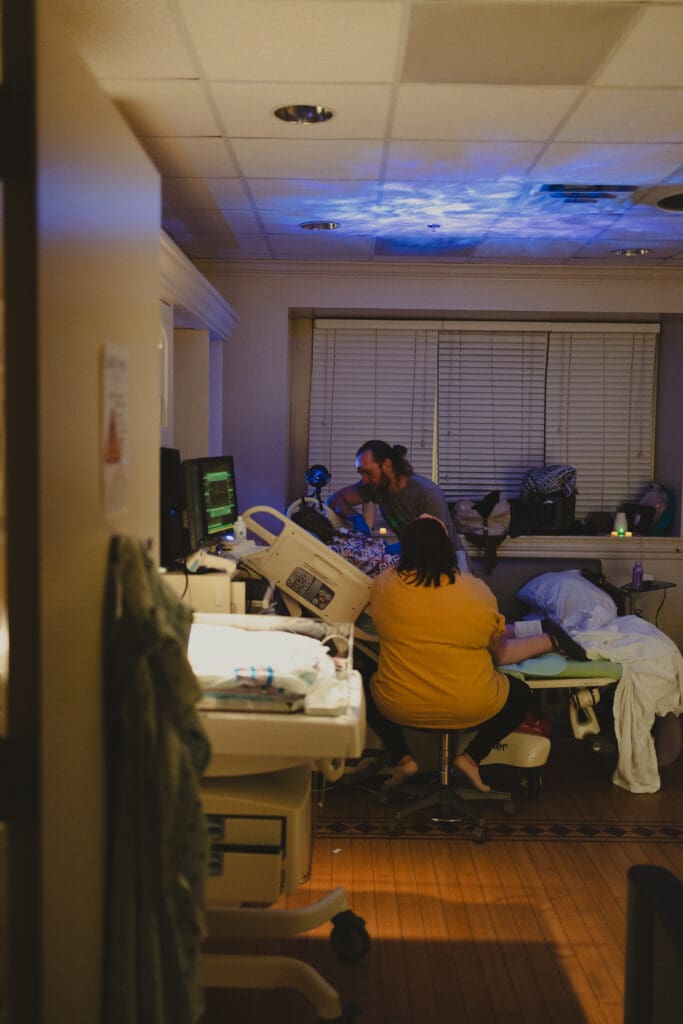
• Protecting the energy of the room
Soft lighting. Quiet voices. A slower pace. A sense of safety you can actually feel.
• Support through decisions
If something unexpected comes up, a doula can help you understand your options so you can make decisions you feel good about.
How a Doula Supports You After Birth
Birth isn’t the finish line, it’s just the beginning.
After your baby arrives, your doula can help you ease into those first sacred moments with more confidence and less overwhelm. This might look like helping you settle in skin-to-skin, supporting those first attempts at breastfeeding, or simply offering reassurance in the aftermath.
A doula can also help you process your birth experience. Those early hours after birth are often hazy and filled with all different emotions. Talking about the experience with your doula in the days and weeks following birth can help you process and work through your feelings around it.
Some doulas offer longer term postpartum care. This is a particular area of passion for me, as I feel birthing people tend to get overlooked after the baby is here. Postpartum should be a time where you are deeply cared for too.
What Doulas Don’t Do
A doula is not a medical provider.
Doulas don’t perform exams, diagnose, monitor fetal heart tones, or make any medical decisions.
Your doula can advocate for you, but more importantly, we help you advocate for yourself.
Doulas don’t replace your partner, we support them, too.
And we don’t tell you how you “should” give birth.
Your birth is your own, a doula’s role is to support that.
The Evidence: Why Doula Support Matters
The research on doulas is strong. Studies show numerous benefits to having a doula during your labor and birth:
- Continuous labor support is linked to a 25% lower risk of cesarean.
- When that support comes from a trained doula, the reduction increases to 39%.
- People with doula support are 31% less likely to use Pitocin, more likely to have shorter labors, and to have positive birth experiences.
- Babies have better Apgar scores, and parents are less likely to report mistreatment during childbirth.
(Source: Evidence Based Birth, “The Evidence for Doulas”)
The data is clear:
Having a doula can change the birth experience—for the better.
Who a Doula Is Really For
There’s a common misconception that doulas are only for some types of births, but that’s far from the truth.
A doula is for you if you want to feel supported and informed during pregnancy, birth, and postpartum. Doulas work with families whether they are planning epidurals or unmedicated births, families delivering in hospitals or with midwives, families having their second, third, or fifth baby, and families who simply don’t want to navigate birth alone.
Whether you’re preparing for a hospital birth, a birthing center delivery, or a home birth surrounded by midwives, doula care adapts to your needs and preferences. It isn’t about a specific type of birth, it’s about supporting you through your birth, whatever that looks like.
A doula can help you feel more confident, more cared for, and more connected to your own strength. No matter what kind of birth you’re planning.
You Don’t Have to Navigate Birth Alone
If you’re planning your 2026 birth and wondering whether doula support might be right for you, you can learn more about working with a Tifton doula here.


comments +